Viral Wealth: How Finance Became Content (And What We Can Do About It)
TikTok turned money into a meme. From G-Wagon tax hacks to “Girl Math.” But beneath the trends lies a deeper problem: traditional financial advice doesn’t work for the new age. It's time we rebuild it

“Buying a G-Wagon can save you money on taxes.”
“Returns are free money - it’s just Girl Math.”
“Those 10 Chipotle burritos? Could’ve been $2,000 in CMG stock.”
This is the TikTokification of personal finance. A chaotic, addictive blend of skits, punchlines, and hot takes replacing spreadsheets and advisors. It’s often misleading, but it works.
But before we scoff, let’s admit something: it works.
Financial content today is viral, snackable, and everywhere. And it’s reshaping how a whole generation relates to money, not just how they save or spend, but how they think about wealth, risk, and reward.
So what broke? Why are millions trusting meme pages over mutual fund managers?
Old Advice, New Economy
Much of traditional financial advice was built for a different world, one with 9-to-5 jobs, linear careers, affordable homes, and stable interest rates. That world doesn't exist anymore.
Buying a home isn’t delayed, it’s off the table for the newer generation. Only 26% of Gen Z believe they’ll own a home by age 35, according to a recent survey. For many, the idea of saving for a distant goal like a house feels almost delusional. Instead, they spend on experiences - with 60% of Millennials reporting they prioritize travel and entertainment over necessities.
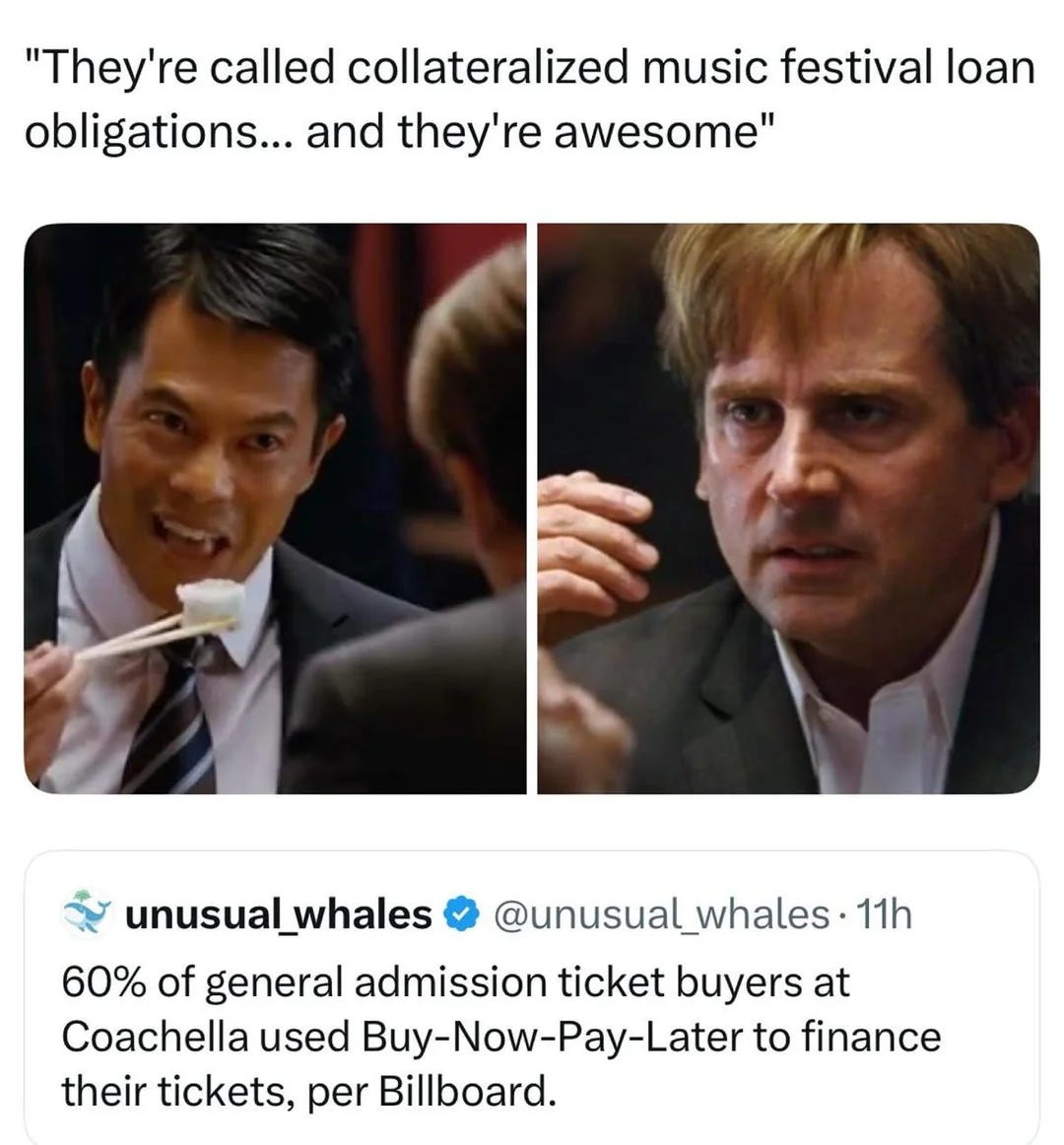
Around 60% of ticket buyers at Coachella used their buy now, pay later (BNPL) plans in 2025. Since it introduced payment plans in 2009, usage among attendees has skyrocketed from 18% to 60% in 2025, especially among younger fans. It's not hard to see why: instant gratification now, $200-a-month pain later.
When Advice Becomes Entertainment
We’re now in the “content-ification” of wealth:
A metal credit card is a status symbol, not a tool.
A viral investing story gets more reach than any index fund tutorial.
Punchlines like “had you bought starbucks shares instead of 10 lattes” create the illusion of wisdom; but rarely hold up to scrutiny.
That last one is a prime example. It masquerades as insight, but offers no real understanding of capital allocation, risk, or lifestyle tradeoffs. It's what you'd call contentified hindsight - not financial thinking.
The Real Problem: Systemic, Not Superficial
The explosion of creator-led financial advice isn't the root problem, it's a symptom.
The real issue is this: we lack a financial system - product-wise and culturally, that speaks to the realities of modern life.
Consider this:
Only 31% of Gen Z has any kind of retirement account, vs. 54% of Millennials at the same age (Transamerica, 2023)
Nearly half of Gen Z (47%) get financial advice primarily from social media, and just 23% trust traditional financial institutions (LendingTree, 2023)
While 68% of Gen Z download budgeting/investing apps, only 14% use them consistently after 90 days (Plaid, 2023)
Most fintech tooling is either hyper-simplified (robo-advisors for passive investing) or built for the already-savvy. There’s very little that combines intelligence, context, and relatability.
The “fun vs serious” divide in finance is artificial. What users actually need is a system that’s both engaging and trusted, something that respects their intelligence but also meets them where they are.
And that’s where tech, and not TikTok - may actually have an answer.
Where Tech (Finally) Gets Interesting
We're now seeing the early signals of a smarter, more human, product-led future for personal finance. A few core trends are worth watching:
1. The Rise of Narrative-Driven Finance Tools
Apps like Monarch Money are rethinking money tracking — not with charts and ratios, but with stories. Users set emotional goals ("buy my mom a home") or life arcs ("quit my job in 2 years"), and the app builds around those. It’s still math but wrapped in meaning.
2. Chat Interfaces and Ambient Finance
Tools like Cleo (which crossed $100M in ARR!) or Charlie embed money nudges into your day - via chat, not dashboards. It’s not “open your app and plan,” it’s “here’s what changed today, here’s what to know.” This lowers the friction for engagement without dumbing it down.
3. Planning as Simulation
Instead of giving fixed advice, apps are letting you simulate choices. What happens if I move to a different city? Change jobs? Go freelance? Tools like Yotta and even AI copilots built on GPT-4 are offering interactive planning, not static advice.
4. Social-Layered Finance
Group investing, collaborative money tracking, or even “financial leagues” where you compete (privately) with friends is already bubbling. Think Strava, but for saving. Hard to pull off, but could massively shift engagement.
Why AI Is Just One Part of the Solution
Yes, AI will help. It can turn tax code into human language. It can summarize your monthly trends. It can warn you about lifestyle inflation with calm detachment.
But it’s not a silver bullet.
The bigger shift will be rethinking how finance fits into our lives, not just how it’s delivered. It means accepting that most people don't want to become personal finance experts. They want to be understood, guided, and empowered; without having to decipher PDFs and annualized returns.
Finance needs to become more like Notion: modular, intuitive, and context-aware - not just serious or safe.
So What Now?
We don’t need more advice. We need more tools that treat financial clarity the way Spotify treats playlists: personally, flexibly, and dynamically.
What we need next is:
Tools that respect emotion without selling fantasy
Interfaces that encourage curiosity, not shame
Ecosystems that don’t just manage wealth, but help build it
And maybe, just maybe, we need fewer viral takes. Just quieter tools that actually work.
Some unrelated memes!